NASA Space Grant
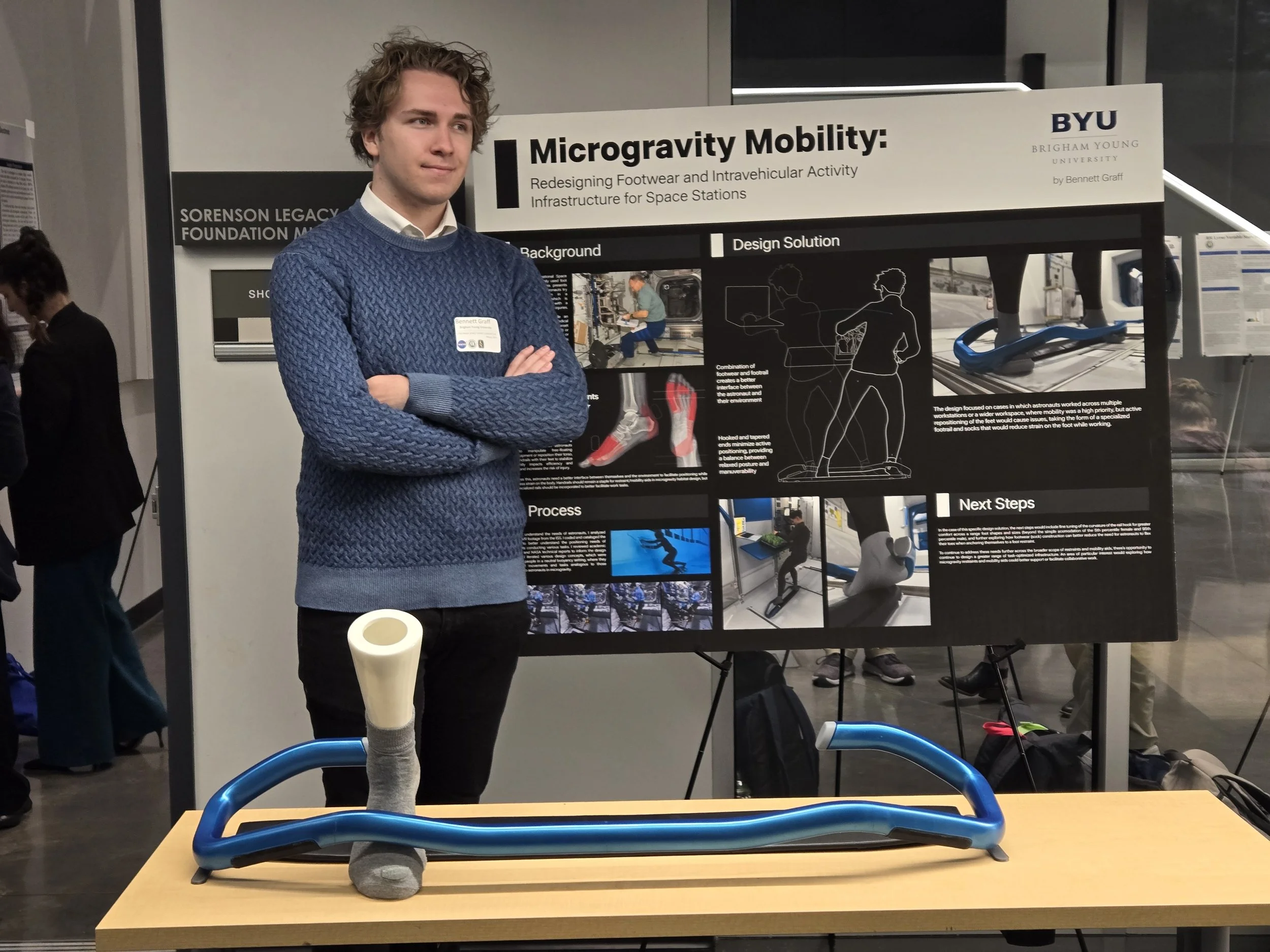
My research proposal to explore restraints and mobility aids for intravehicular activity (IVA) in microgravity environments was selected for a Utah NASA Space Grant Fellowship. For my senior project, I explored increasing comfort, making space mobility more accessible, and reducing kinesthetic cognitive load.
Problem
While handrails are very convenient, they can be uncomfortable when used as footholds for positioning the body with one’s feet.
To maintain their positioning, astronauts have to flex and contort their feet around handrails.
“
In zero-g, you hook your feet under “handrails,” thus shifting the load from the bottom to the top of the foot… the tops of your feet become red-rubbed raw and gnarly… Perpetually raw and hypersensitive, your foot tops can use a bit of padding to ease the pain.
-Don Petit (Astronaut)


Process
Design Research
Due to the inaccessibility of the users, research focused on relevant academic literature, writings/interviews of astronauts, and coding hours of footage of life/work on the ISS.
Ideation
Ideation focuses varied throughout the project, but ultimately focused around the combination of both footwear and built infrastructure.
IRB Approval for Testing
Due to the funding specifications, it was necessary to get IRB approval for all user testing. All testing procedures needed to be outlined extremely thoroughly and then submitted to BYU’s Institutional Review Board for approval and revisions (a 1-2 month process). For this project, the IRB-approved testing protocols totaled over 100 pages, including strict safety guidelines for the neutral buoyancy testing, figures for each test, and all the questions for each testing session.
Simulated Testing
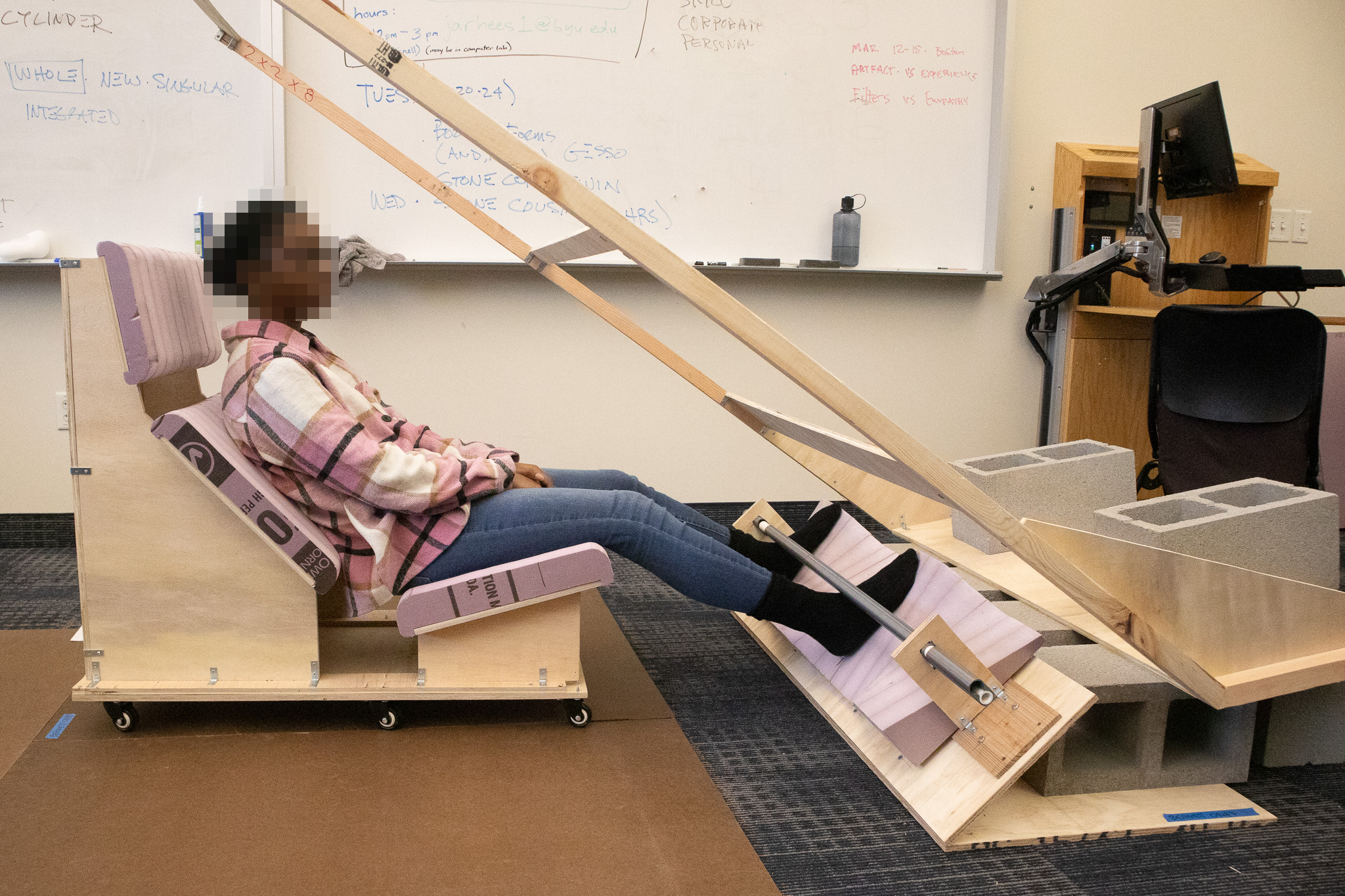
To simulate different aspects of microgravity, short duration neutral buoyancy testing, and using a movable chair in an angled position to simulate neutral body posture (NBP) were used for formal, contextual testing. Various forms were informally assessed for comfort prior to contextual testing.
Prototyping
Prioritizing process efficiency, most prototypes were 3D-printed or formed out of foam, however, any materials used had to have some kind of space-grade functional equivalent.
Virtual Ethnography
I used footage of astronauts living and working on the ISS and cataloged 152 instances of astronauts using handrails as foot restraints, and categorized them by factors that could influence experience or behavior such as:
Individual astronaut
Relative positioning of feet
Method of stabilization (if applicable)
Activity
Duration
My main source was VR footage from inside the space station of day-to-day life in space. Other videos of astronauts performing experiments were used as well. Generally, videos where an astronaut was presenting to a camera were not used unless another activity was involved.
Design Testing
For this project, I’m conducting two types of testing: general human factors testing and neutral buoyancy testing. Due to the conditions of the fellowship, all testing has to receive IRB approval.
Comfort and grip testing
The original plan was that the first rounds of testing would use a chair to mimic neutral body posture for testing. This method proved ineffective; the chair had too much inertia and test users had to think too much about carrying out the exercises such that it didn’t provide very useful testing data.
Retrospectively, a better approach would have been to have an NPB seat angled further back, with the foot restraints attached to a weighted surface suspended by ropes/cables, and move the foot restraint rather than the person, but due to the constraints or working within IRB-approved procedures, this was not an option during this project.

Neutral buoyancy testing
After receiving IRB approval, I conducted testing in a swimming pool to approximate microgravity and assess the design prototypes’ ability to facilitate movement and orientation in 3-dimensional space.


Presentation
The culmination of this project presenting at t Utah NASA Space Grant Consortium’s 2024 Fellowship Symposium